How ‘The Fantastic Four: First Steps’ Brought the Baxter Building to Life
Production designer Kasra Farahani breaks down some of the Marvel film’s gorgeous sets — from the Fantastic Four’s homey kitchen to Reed Richards’ high-tech lab.
The Fantastic Four: First Steps may take place on Earth, but it’s an Earth unlike any you’ve ever seen.
Marvel Studios’ newest film is set in an alternate dimension far from the rest of the Marvel Cinematic Universe: a retro-futuristic, 1960s-inspired world called Earth-828. With its space-age skyscrapers and flying cars, the New York of Earth-828 is a wondrous place, and it’s home to the heroes Reed Richards, Sue Storm, Johnny Storm, and Ben Grimm, who reside together in the Baxter Building.
One of the people responsible for bringing Earth-828 to life is production designer Kasra Farahani, who previously joined the MCU with Loki. There, he designed the winding mid-century hallways and retro offices of the TVA, and director Matt Shakman and Marvel Studios president Kevin Feige were eager to bring him back for Fantastic Four.
“[I loved] the look of the TVA and the look of that series,” Feige gushes about Farahani’s work on Loki. “We thought that if we were lucky enough and he agreed to come be the production designer of this movie, he could just go wild. I love that people are responding to the Baxter Building, the lab, the kitchen, the Fantasticar, the ship.”
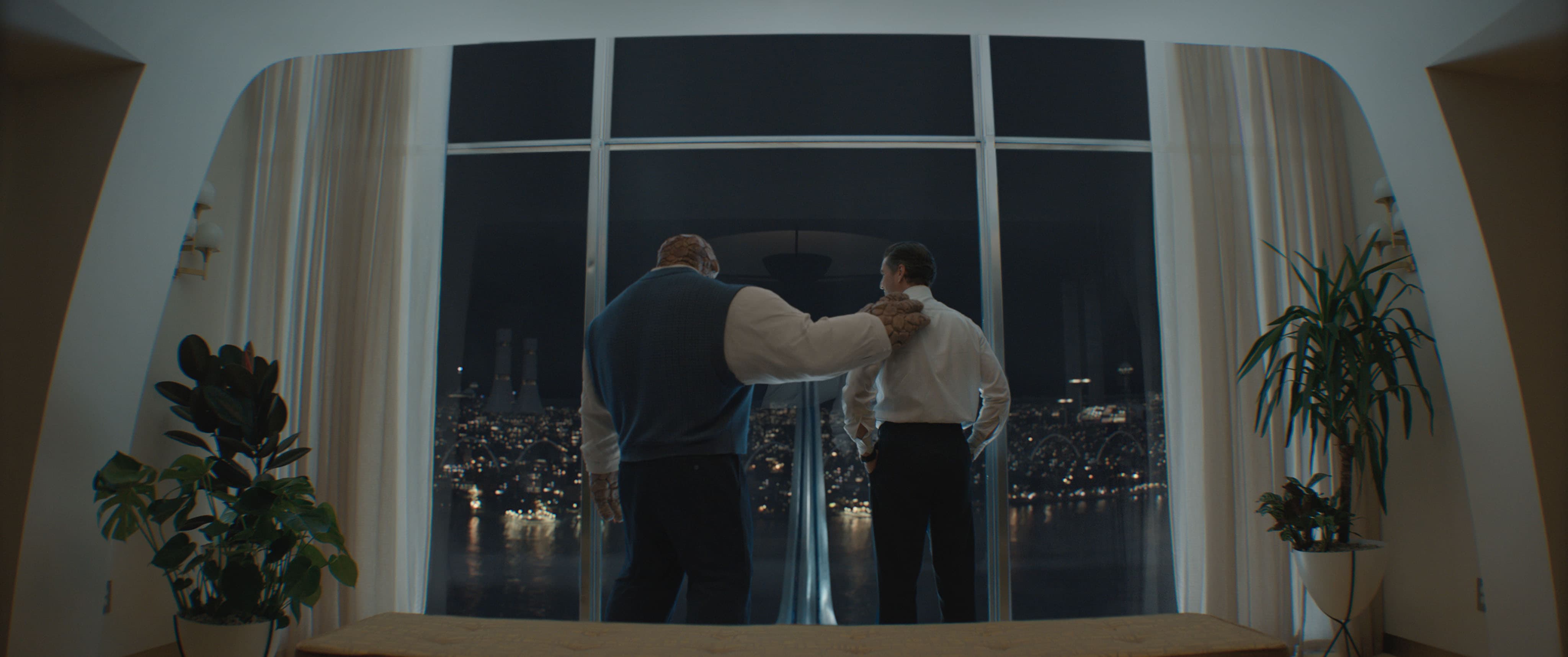
To build The Fantastic Four’s futuristic version of Manhattan, Farahani looked to legendary architects like Eero Saarinen and Oscar Niemeyer, as well as sci-fi classics like 2001: A Space Odyssey. Original Fantastic Four comic artist Jack Kirby was also a major influence, as were futurist illustrators like John Berkey, Syd Mead, Charles Schridde, and Arthur Radebaugh. The goal, Farahani says, was to blend the sleek, sophisticated style of Saarinen or Niemeyer with the more whimsical, pie-in-the-sky fantasy of Disney’s Tomorrowland — complete with fanciful tech and talking robots.
Much of the film takes place within the Fantastic Four’s penthouse at the top of the Baxter Building, and Farahani and his team wanted to build a space that was part sci-fi spectacle, part snug family abode.
“We wanted it to feel like a home,” Farahani explains. “We wanted it to feel warm and like a place where our family lived — which is a little challenging because they’re essentially in a Manhattan penthouse. And Manhattan penthouses are beautiful and striking, but not necessarily the first thing that comes to mind when you think of a cozy warm home for a family.”
So, Farahani reimagined the family’s apartment as a “cabin within a penthouse,” with warm-toned wooden paneling, a cozy central fireplace, and a sunken conversation pit. The color palette also differentiates it from the rest of Earth-828 New York: The surrounding skyscrapers are mostly silvery whites and blues, but the inside of the Baxter Building is all gold, brass, and warm wood.
To make the home feel even more welcoming, Farahani emphasized mid-century materials like flagstone rocks and indoor plants. “You’re bringing all these natural elements inside to create this place that doesn’t feel sterile or cold,” he explains.
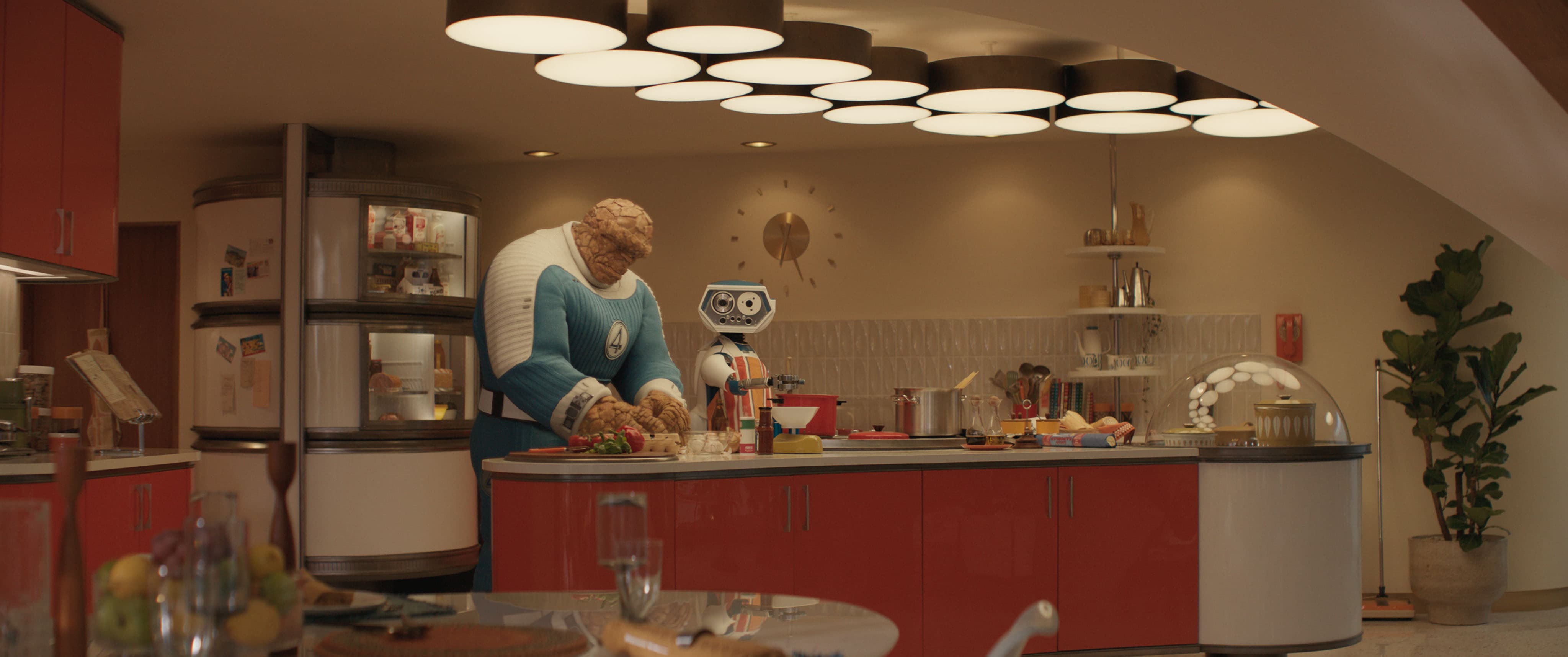
Like most families, the Fantastic Four spend a lot of time in their kitchen, where they cook together, socialize, and trade banter. For inspiration, Farahani studied futuristic displays from the 1964 World’s Fair, as well as Frigidaire’s famed “Kitchen of Tomorrow,” created by General Motors. The Fantastic Four’s kitchen has plenty of nifty, futuristic gadgets — like a domed barbecue grill and a motorized cake platter — but Farahani also wanted it to feel familiar to viewers’ kitchens at home.
“We wanted to have some of that jet-age tech mixed in, but not so much that it made it too abstract or unrelatable,” he explains. “The kitchen is the core of a home, and it’s certainly the core for the Fantastic Four with their family dinners every week. For Ben, it’s in some ways his domain. So, it was really important to make it feel warm and relatable, not too futuristic.”
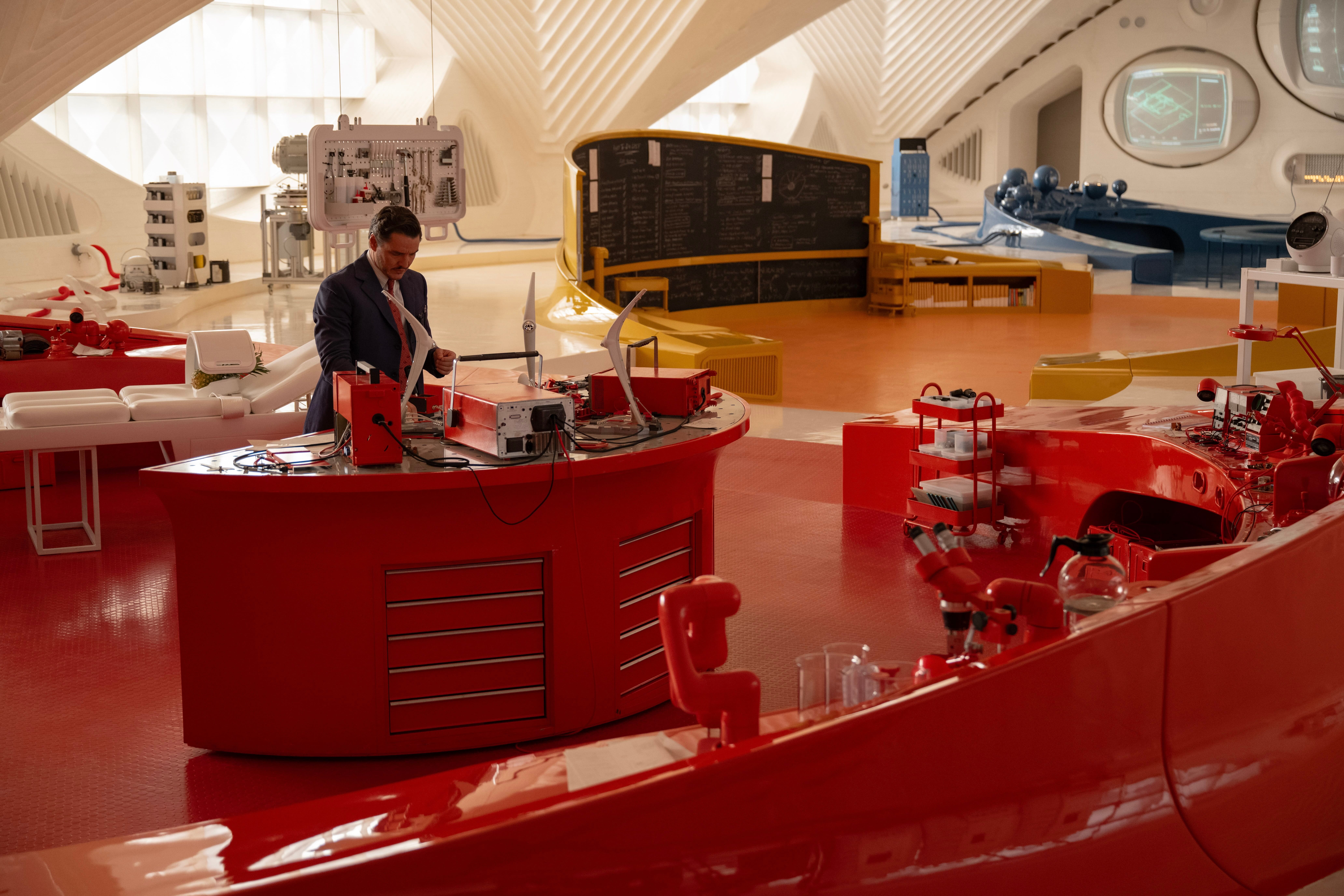
Reed’s laboratory is also a key location within the Baxter Building. If the living spaces are bright and airy, then Reed’s lab is far more fortified, with thick walls and ceilings designed to withstand accidental explosions.
Reed has separated his lab into three distinct workstations, each marked with a different primary color. The red workstation, Farahani explains, is “where all the messy work happens,” where Reed gets his hands dirty by tinkering with electronics and chemistry. The yellow area is a “space for contemplation,” complete with bookshelves, curved chalkboards, and seats for the other members of the team to join in on brainstorming sessions. Finally, the blue workstation is mission control, where he and the others can monitor communications around the world.
One of Farahani’s favorite details is the Fantastic Four’s rocket launchpad, jutting out from the Baxter Building into the middle of the East River. “We kind of went totally overboard in designing all the functionality of how you could launch a rocket in midtown Manhattan without creating chaos,” he says with a laugh. Farahani and his team devised an ingenious system that would make Reed Richards himself proud: There’s a rotating system of blast shields, as well as a catchment system that pulls water from the river to create massive vapor curtains, dulling the flames and protecting the public from liftoff.
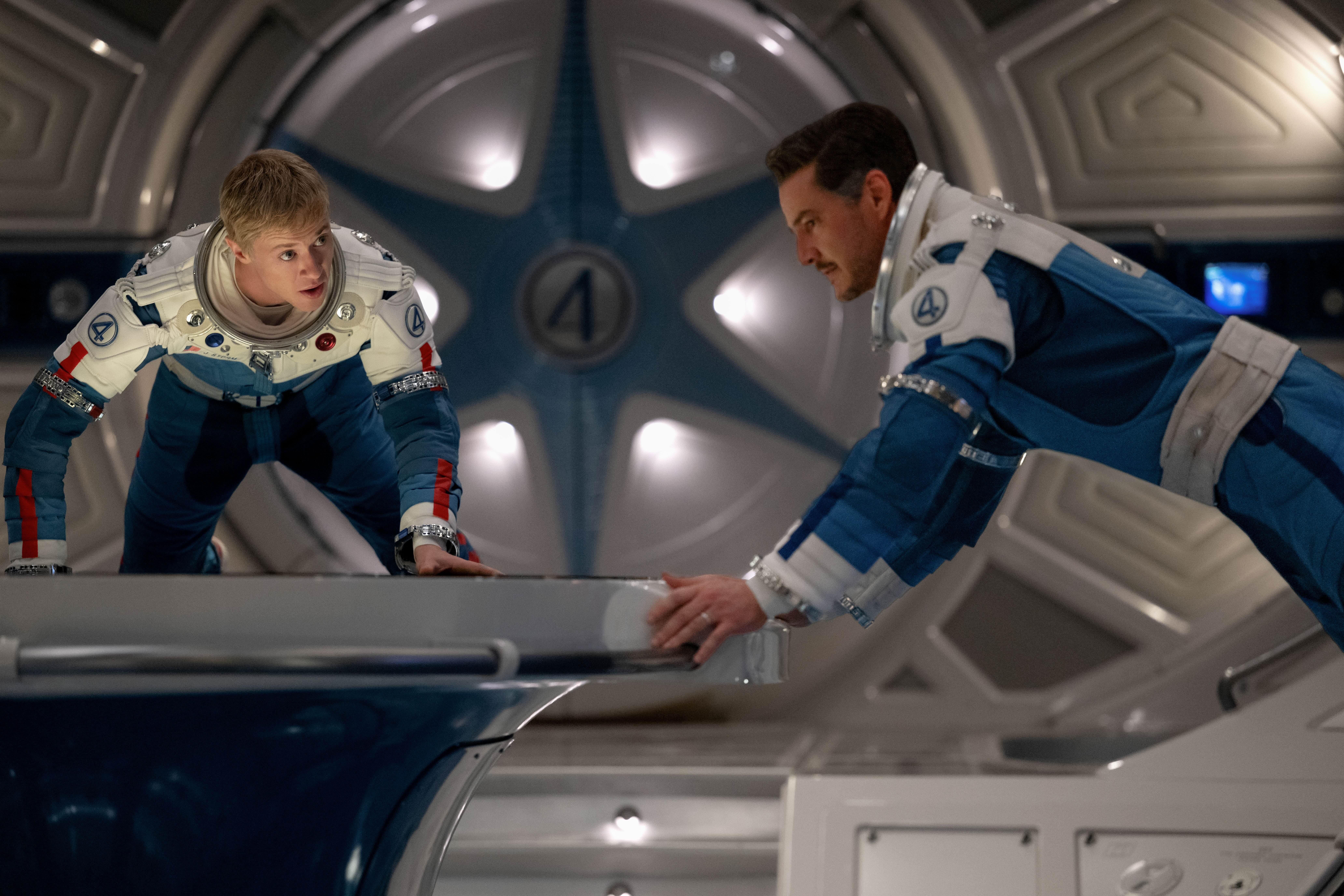
As for the Excelsior rocket itself, Farahani drew inspiration from the original blueprints for the Apollo missions. But he also gave the interior a more polished, futuristic twist — something worthy of Reed Richards’ genius. The huge blue soffit that runs along the ceiling echoes Eero Saarinen’s famous TWA tunnel at John F. Kennedy International Airport, and Reed has placed workstations on every wall and ceiling, so the group can work easily in zero gravity.
“It was important for us that the interior of the Excelsior feel sophisticated enough to be past the prototype stage,” Farahani explains. “This is a smart guy, so that’s why when you get in there, it’s a little bit more finished, and there’s a bit more of an architectural feel.”
The result is a rich, lived-in world that feels, well, fantastic.
“It’s about optimism, and it’s a utopia,” Farahani adds. “It was a nice break from a lot of the dystopias that we do!”
Marvel Studios’ The Fantastic Four: First Steps is in theaters now.
The Daily Bugle
Can’t-miss news and updates from across the Marvel Universe!