A Conversation with Marvel Studios’ ‘The Avengers’ Lakota Language Dub Team
Read Angélique Roché’s extended interview with the team behind the Lakota Language dub of ‘The Avengers.’
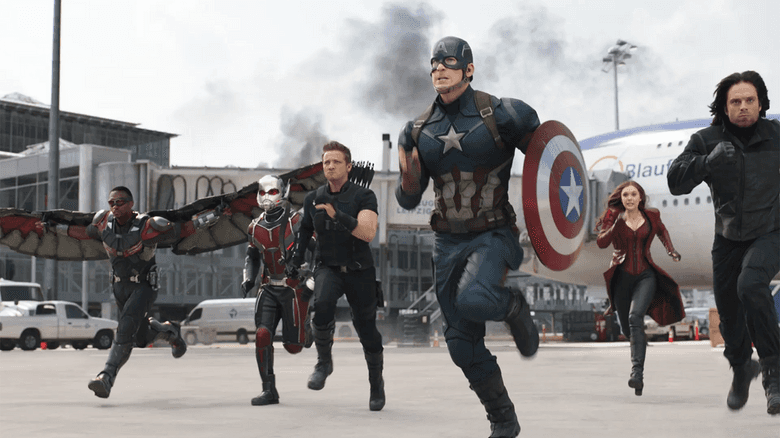
Last year, Marvel Studios released its very first Lakota Language project with the dubbing of Marvel Studios’ The Avengers. The project took over 15 months and involved 62 Lakota-Dakota language speakers, as well as the original Avengers team, to help reintroduce and promote the Lakota language.
To help celebrate the power of our voices, the Marvel’s Voices team had a chance to chat with some of the people who worked on this incredible project. Included below is part of Marvel’s Voices Consulting Editor Angélique Roché’s conversation with the owner and founder of Grey Willow Studios & Production, Lawrence F. Archambault (LFA); Councilman At Large for the Standing Rock Sioux Tribe, Cyril Archambault (CA); Tribal Engagement & Language Specialist, Dallas M. Nelson (DMN); and Lakota language and culture community coordinator, Eugene “Ray” Taken Alive (RTA).
Tell me a little bit about where you grew up.
LFA: What I loved was growing up with my grandparents; we always had instruments in the home, with music playing and my grandfather on his saxophone. He can play any instrument. I remember every Sunday, his brothers and relatives would come over, and they would sing and play music. My uncle Lincoln Hairy Chin and Grandpa LeRoy Archambault would sing gospel hymns in Lakota.
CA: [I grew up in] Rock Creek, South Dakota. I had the opportunity to learn our Lakota culture through my father and through my uncles. I was able to pick up on the ceremonies and some of the language, which I’m currently still working on with my misun (little brother), Ray Taken Alive.
DMN: My mother is Una Yellow Bull, and my father is Daniel Nelson. I am from the Red Cloud, Horn Cloud, Brewer, and Nelson tiospaye (communities). I grew up in Pine Ridge, South Dakota, which is the capital of the Oglala Lakota Nation. They say there are two types of Lakota: Oglala Lakota and those who want to be Oglala Lakota.
How did the Lakota dub of Marvel Studios’ Avengers come about?
RTA: We always talk about how we can get the youth excited to learn their language. For Halloween in our communities, when we would give out candy or take our kids trick-or-treating, we realized that about 75% of the kids are dressed up as Avengers characters, so this felt like a really great way to combine these two worlds, the interests of our children with our Elders’ language. My ciye (older brother) Chuck got to know Mark Ruffalo when he was here on Standing Rock protesting the Dakota Access Pipeline.
CA: Ray is really into the language stuff, and one day he asked, “I wonder who the first people or first tribe will be to put out a movie in Lakota?” We started talking about The Avengers, and it just so happens that I became really good friends with Mark Ruffalo. I said, “You think I should just text Mark and ask him?” Long story short, I texted him and asked him, and he called me back right away. He was like, “Let me make some phone calls, I’ll get back to you.”
We were getting ready for a ceremony and I got a phone call from Arthur Roses, Mark’s assistant, and he said, “Hey, Chuck, can you get on a Zoom in five minutes?” So I jumped straight onto the phone with Ray and was like, “Misun, I think this is our opportunity—our shot. We need to get on this Zoom call.” And here we are, two little rez boys—I guess we’re men now, but we probably looked and sounded like little boys on that Zoom call—and we get on the call and they were talking about another movie that was coming out. They had another man on there who made Star Wars in Navajo, and also did parts of Finding Nemo in Navajo, and we pitched our idea. Everyone was for it and thought it was an amazing idea. We had a little team already together and we knew who we could call to get things done if the opportunity arose. Ray immediately called our brother Dallas, and he wrote a grant to secure funding for the movie. Then we hit the ground running.
DMN: My older brother Ray dreamed for years about dubbing films into Lakota. We would always say, “That would be the dream!” but it never quite moved forward. Then, my brother Chuck made a connection with Mark Ruffalo, which set everything in motion. With support from Jodi Archambault, we outfitted Grey Willow Studios with state-of-the-art equipment and received training from Deluxe Studios. Through this, the Lakota Language Reclamation Project was funded to implement the grant, and our brother Lawrence and his son Xavier were trained to carry out the dub at Grey Willow Studios.
Why was The Avengers a good choice for this project? What was your hope for the project?
CA: It was really about “how are we gonna get our families to sit down and watch a movie in their homes?” And I remember there was a mom sitting there with her kids, and her kids were recording her when they turned it on, and she started crying, “Baby, this is our people’s language being spoken. Listen.” Seeing the Elders in the nursing homes, the communities that we visited, showing it at the movie theaters, wherever it may be—they made makeshift movie theaters just for them to watch this. The sense of pride and how it made them feel is what’s most important.
DMN: We all love The Avengers, and kids especially love The Avengers. For us, language reclamation is about finding ways to connect children to our language through our Elders. This project was perfect because Elders were involved every step of the way—translating, guiding, and teaching. The result is not just a movie but an epic resource for all children in Lakota Country. Its reach has been incredible, and the quality shines because of the wisdom and care of our Elders.
RTA: Our hope for the project is to let the next generations know that they do not have to be afraid to speak our language. Not just to not fear but to be bold in speaking their language. Our people were forced to attend residential schools. In those schools, they were punished for speaking their language, a language that helped the U.S. in WWI. My Grandfather was a Lakota Code Talker in WWI. But due to a lot of hardships our people faced in speaking their language, out of love, many chose not to pass it on to their children to protect them from what they went through.
Now things have changed, and this project puts that change at the forefront. The Avengers franchise is one of the most popular franchises in the world with the biggest stars in the world, and now with them speaking our language, it shows the strength of our people to everyone, but most importantly to our children. It was really humbling to see the actual Avengers working hard on their Lakota pronunciation, and to see the care and respect that they did it with was really touching.
How did you get involved in the project, and why?
DMN: Ray and I have been working on language together for close to a decade—documenting, teaching, learning, and building resources through a bunch of ongoing projects. At the time, I was Director of Language & Education at Thunder Valley CDC, which was the fiscal sponsor for the Lakota Language Reclamation Project, and Ray was the P.I. on the grant. My role was mostly making sure the backend ran smoothly—getting people paid, handling planning, and implementation. Whenever I could, I jumped in to help with recording and translation as well.
LFA: When I founded Grey Willow Studios in an old school classroom in Fort Yates, North Dakota, Cyril and Ray asked me, “Can you do this?” I said sure, but I need my son (Xavier) on board. He was hesitant because we’d never done film and ADR work, but we said yes.
CA: It really was a passion project. We wanted to put the language back in the homes where the language was taken from us and our families. We wanted our families to gather around the living room and have the language of our ancestors spoken in the home, so they could have that feeling of love and sense of pride knowing that we’re still here and we’re not going anywhere.
Can you tell us a little bit about the translation process?
DMN: First, the entire script had to be translated, which Ray and our three treasured Elders, Ruby Shoestring, Grace Draskovic, and Myron Uses Arrow, worked tirelessly to complete. Then Ray and the Elders taught the actors how to perform their lines in Lakota.
RTA: The translation took over 200 hours, but it was a fun and rewarding experience. The Elders had to build their own version of the MCU. I remember the very first line we translated: “The Tesseract has awakened.” First, we looked up what tesseract meant in the dictionary, then we looked up how it was used in the MCU, and then I would try to explain it the best I could and Leksi (Uncle) Myron would explain it in Lakota to Unci (Grandmother) Grace and Unci Ruby, then they would talk for a while in Lakota until they found a word. After they all felt comfortable, we moved on. They came up with words for “Hellcarrier” and “tank” and a lot of different words like that. The word for tank was 17 syllables long. We did this with the entire script, line by line, word for word. Eventually, the actor was in the studio. Sometimes, we had to make changes to fit the actors’ dialect or to fit the time stamps, but there was always an Elder with us making sure the language stayed correct.
What went into the process of performing each part as translated?
RTA: This was part of my responsibility for the project. I made videos of myself pronouncing the words with a phonetic spelling. The first time I said it slowly, syllable by syllable, then faster, and the third time, I tried to perform it like the character. After I completed the video, I would send it to their agents. While recording, we brought in the different voice actors to assist with pronunciation and performance. It was interesting to see each of their different approaches to their craft, and I felt humbled to be able to see that.
CA: We had a whole team of speakers that were there helping out and I sat in the studio myself. I was mimicking Ray but putting my own energy to it and getting the words correctly. The fluent speakers sat in there listening too, and if you were a little bit off, they were right there to correct you and help you out. And each and every one of the Avengers took part in this project. Most only played a little part in it, except for Mark, who plays all his parts, but they were down and wanted to do this because they understood the importance of our language being put back into the homes of our own people.
When we were talking to Chris Hemsworth, it was crazy because obviously he comes from Australia but he had our sense of humor; he knew where we came from and was sitting there laughing with us and joking right back with us. Robert Downey Jr. sat there at his son’s little league baseball game on the phone call with us, and he knew how important this was and basically said, “AVENGERS ASSEMBLE.”
DMN: From casting to recording, we were able to lift up both fluent speakers and learners of Lakota. That energy is still alive in everyone who took part, whether they had a big role, a single line, or were just cheering from the sidelines. Watching some of my own relatives act out the lines was powerful and deeply moving. It made me proud to be Lakota and proud of my family. Most of all, it reaffirmed for me that we can do anything we set our minds to.
What is the power and significance of language and cultural representation?
DMN: As Lakota people, we have endured attempts at total annihilation, through war in the late 1800s and federal policies that forced us into prison camps such as Pine Ridge (POW Camp #334). Despite these injustices, we have carried forward a deep and unbroken connection to our land, language, and lifeways. That connection is powerful because it is what sustains us: It carries our knowledge, our ceremonies, and our responsibilities to one another and to the land. The significance of language and cultural representation is that it gives us the ability to heal from generations of harm, to root our children in who they are, and to ensure future generations inherit not only survival, but the full strength of who we are as a people.
CA: Xavier and Lawrence did an amazing job in the studio recording and dubbing. [They] got to meet Doc Kane, one of the biggest dub men in the industry. They were out there with Marvel and learned so much from them. The idea is, don’t tell us and do it for us—show us how to do it so we can do it again. It’s a whole reclamation, reclaiming our language, getting back to our roots and who we are. As indigenous people and Lakota people, we are beautiful people, we have a beautiful language, and I think that’s important for people to know. The word “Lakota” really means “ally, friend,” so we put that into our title, the Lakota dub of The Avengers. We’re excited to possibly do more. We have different movie ideas, but of course, we want to finish out The Avengers and keep going. Our ultimate goal is to write our own movie and have that on the big screen and tell our stories.
LFA: To me, it’s our roots. When I hear it, I can (most times) understand since I grew up with it, but I still need a lot of learning. To me, it’s very powerful and fills my soul with happiness, especially years later. Working with our Elders and this project brought back so many memories of my grandparents’ home. Our grandparents always said, “The language/culture starts at home,” so one way of getting it in the home is through movies.
RTA: At the premiere, one of the Elders sat in the front row with his grandson. He was proud and emotional. It was rewarding to see two generations together, connected by the movie. Also, an Elder home facility in the Black Hills shared the movie. It was the first time they probably got to watch an entire movie in their first language. It is humbling to see those types of things. We watched them really laugh during the part where the Hulk falls from the sky, wakes up as Banner, and the security guard tells him what happened. The Lakota words they used in that part are very visual, and so wherever we went and showed the movie, the Elders always watched that part and laughed.
What’s something about the Lakota language you’d like people who watch the dub to learn?
DMN: Honestly, every part of it. Since we have the script in both English and Lakota, teachers and learners can get creative in how they use the film as a teaching or learning tool. More than anything, I hope our Lakota people who watch the dub walk away feeling empowered.
CA: Hearing the Lakota language being spoken on a mainstream service like Disney+ is something unexplainable. We took a lot of time and put a lot of effort into this. There are certain parts that, if you really listen, we throw some Akisha (war whoop) in there, and it’s really a beautiful project. With the Lakota Language, we use a lot of kinship words, and I feel like our language has a lot more meaning behind it. It’s really a love language, the way things are described. As an example, I’ll use the word anpao, it’s the morning time when the sun isn’t quite there, but it describes the colors in the sky and how that is, and you know that feeling.
LFA: For me, it’s for them to listen. There are words in there that haven’t been spoken in years. When I ask Disney/Marvel what Native American comes to mind when you think of Native Americans, everyone said Sitting Bull. Well, this is the Hunkpapa Language, the language of Sitting Bull. I hope that they take an interest in learning from the Elders. We lost so many in the last few years, and the ones that are here with us want to teach and want us to learn.
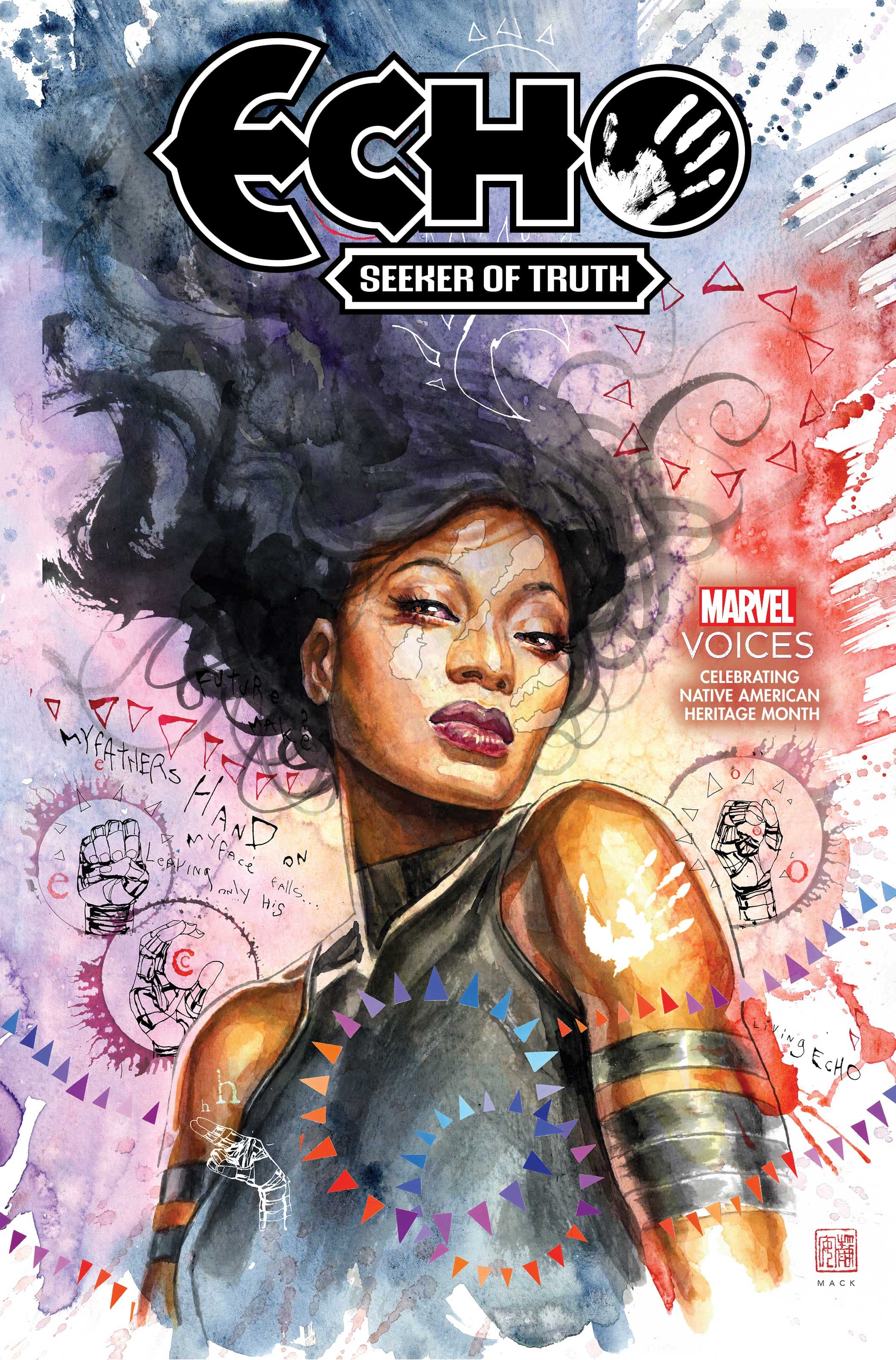
This interview is featured in ECHO: SEEKER OF TRUTH #1, available now!
Marvel Studios’ The Avengers is now available to stream in Lakota on Disney+.
Check out more interviews at Marvel.com/Voices! You can also learn more about Lakota Language Reclamation Project at lakotalanguagereclamationproject.com and about Grey Willow Studios at bygreywillow.com!
The Daily Bugle
Can’t-miss news and updates from across the Marvel Universe!