Todd McFarlane Unpacks McFarlane Toys' New Collaboration with Marvel Unlimited
Marvel legend Todd McFarlane breaks down the benefits of McFarlane Toys’ upcoming collaboration with Marvel Unlimited, which offers digital copies of the comics that inspired the statues.
McFarlane Toys’ Marvel collection just got an upgrade. Through a partnership with Marvel Unlimited, McFarlane Toys’ new line of Marvel collectibles will include a digital copy of the comics that inspired them. Featuring characters such as Spider-Man, Doctor Strange, and Gambit, upcoming statues will provide access to iconic issues like SPIDER-MAN (1990) #6, STRANGE TALES (1951) #128, X-MEN (1991) #1, and more on Marvel Unlimited, offering collectors added value and a new way to appreciate the artistic process.
Speaking to Marvel.com, McFarlane Toys founder Todd McFarlane explained the "inexact science" of adapting original comic art into a 3D sculpt. He broke down the benefits of this collaboration with Marvel Unlimited, as well as the digital nature of the partnership. He also shared the 33-year journey of a personal detail he added to his Juggernaut statue, the conversation-driving nature of the artform, and so much more.
MARVEL.COM: How would you describe this particular line of figures to someone who is new to collecting?
TODD MCFARLANE: I mean, we all agree you don't use the word action figures. The fans have a tendency to throw that term around very loosely, because they see a figure and they just add that first word on there. I know it's a question that people keep asking. It's like, "No, we're not doing articulation."
So we've done these in the past, prior to doing with Marvel, and for me, they're sort of like plastic statues. I said that in a positive way, because a good statue is awesome, but I've had plenty of people go up to my toys over the decades, and then they go, "Oh man!" It looks really sophisticated, and it looks high end, and then they pick it up, and they go, "What? That's plastic!" They think it's made out of a different material, until they get it.
So within the confines, we just call them Marvel collectibles. It's sort of a generic term, but it's just something that, basically, I see toys and statues and what we're doing—collectibles—as being in the same category as hats and shirts. I've already said it before: people who collect toys—especially adults like you and I—we don't do it because we're going to go home and play with them on our floor with our next door neighbor; we do it because it's a way of showing off what we like personally.
We do that all day long with our shirts. You can look at people and go, "What are they wearing on their shirt, and what are they wearing on their hats?" Even some of the jewelry! You can tell real quickly, like, "Oh, you must be a fan of that, because you have it on!" They used to say to me when I was a kid, if you went through somebody's garbage can, you could tell a lot about them. I think the modern version of that is, if you go to somebody's cubicle, you could tell a lot about them, because they put all their fun stuff around them.
So you don't have to now have a hat or a shirt with a logo. You can say, "Hey, I've got Doc Ock... I'm putting it in my cubicle, and it's not because I'm going to necessarily play with it. It's because I'm a Spider Man fan, and particularly I like that villain" or whatever. Then one of your fellow workers walks by your cubicle and happens to peek in and go, "Is that a Doc Ock?" It's like, "Yeah!" And then all of a sudden, next thing you know, you're talking about [the] Spider-Man 3 movie from 10 years ago. So they're just conversation starters.
I think people who don't collect or have crossed the Rubicon of being a geek—comic books and toys, for them, comic books equal the odd Superman and Archie comic when I was a kid, and that's it. That's all they think they are. There's no more depth than that. Toys were like, "Oh, I had a couple G.I. Joes and Barbies," and that's it. So they haven't investigated that both of these areas have such a wide range now that you can show product to somebody from 6 to 66 and you might actually get their interest. So that's all it is!
And can I tell you one thing? We deal with a lot of actors and celebrities. They like it when we make figures of them. Why? It used to be curious to me; like, "Why? You're a big movie star!" and they're like, "No, no, Todd, we can only give so many DVDs of our movies to people, and when we give it to the people that we love—our kids, our moms, dads, our aunts, uncles, whatever—it's just flat. Unless you're watching the movie, they don't know. You make a statue of me? You make a toy of me? I can give that to my nephew, he puts it on his shelf, and when they walk in, he can go, 'That's my uncle!' and they're going, 'Your uncle is so and so?!' 'Yeah, that's him, right there!'"
So they understand the 3D of themselves is a 365-day poster for them and their careers and stuff. They get a kick out of it! Some of them go, "I made it! I'm important enough to be made a figure." That's super awesome.
MARVEL.COM: Why was it important to you to link these figures back to the comics this way? What did that selection process look like?
TODD MCFARLANE: What excites me and is overwhelming is that Marvel has opened up the vault to their entire library of comics—not just covers! Comics. So think about the magnitude of what I just said, and now you go, "Oh my gosh, I can select from millions of images now, and we have to cull it down to 30-40 a year, 50 a year. The bigger one is, which ones do you pick? Because there are so many! You and I can make a list of 500 if we just sat here in about an hour, right? So that's the exciting one. You go, "Oh man!"
There's two [considerations] that I look at, for me, personally: Do the covers or the art resonate with the fans? That if you were to say, "Hey, remember that drawing?" or "Remember that issue? Remember that?", that they would go, "Oh, yeah, right!" There's a lasting impression that's already there. So we try to do some of those.
Then the other one is just to get those million drawings—there's been tens of thousands of artists—and they all have their own look and style. Sometimes, we just pick not because necessarily it resonates, but because the style of it is so cool and different than the other ones.
The home run is you've got something that they remember and it has a cool art style, and you go, "Boom, boom!" There's the homerun ones that are in there. So we're constantly trying to figure out what all those are, and as you can imagine, given there's so many options, the fans go, "How come you're not doing this one and this one and this one?" We're never going to catch up to the demand that people want, but we'll see. Hopefully we can do a nice sampling of the top history of Marvel.
MARVEL.COM: What appealed to you about partnering specifically with Marvel Unlimited for this project?
TODD MCFARLANE: There's two paths you can always go down when you're creating or making something: you can go down the path that's been traveled a lot, that people have seen plenty of, and then you can go down another path and try to surprise people at least a little bit, just give them a little bit of a turn. So we could do a John Romita Sr. Spider-Man; that's the Spider-Man that's on the pajamas and toothpaste and the stationary and all the things. To me, he's the Norman Rockwell of the Spider-Man look, but that look, to me, has—consumer-wise, not comic book-wise, like consumer-wise—been around for almost forever, almost since John himself started drawing it.
The Unlimited stuff, to me, starts to move off-center a little bit and allows us to do a couple things: one, maybe some characters that wouldn't be quite obvious, which I think is important, because again, you can only do so many Spider-Mans. You can only do so many Iron Mans, sort of the core Avengers. You can only do those so many times. Marvel has this really deep bench of characters that goes 50 deep really easily. You can name 50 characters really easily.
Then you guys are taking those characters and lending them out to different places that allow us to experiment a little bit more, like with the Marvel Rivals and stuff. That's a look now! That's going back to your original question of, "What do you look for?" What you're looking for is, "Oh man, we can now do a Hulk that looks different! We can now do a Spidey that looks different! We can now do a Venom that looks different!" We can do the other ones that people want, and we'll give them that classic one, but now we can also tweak it a bit in a fun fashion, so that if you are a fan of those characters, then you can go, "Oh my gosh, I'm a Hulk fan; I can buy another Hulk!" and not feel like it's a repetition of it.
I think some of the coolest collections I've ever seen are people who do singular characters. I don't know if you've seen these ones, and Spider-Man would be too broad, but I've seen Spider-Man collections like this, I've seen Batman collections like this, Superman collections, Captain America, where they've got 100 figures, and they're all that one character, but it's every size, shape, color, variation, scale on it, and even quality and detail of it, everything from like, "Oh my God, that's the ugly baby!" to like, "Oh man..." When you get 100 of the same character, I don't care where you got it from, it's super cool. It's super cool!
So I think the Marvel Unlimited allows us to add that element, to go, "Oh-ho, you think you've gotten every single Captain America? You think you've gotten every single Iron Man? Well, you don't have this one!" I mean, again, we'll still do some of the characters that aren't the big core ones, but when you can find a niche to be able to go, "Aha!"
We can now—what you and I—I don't know what you call them internally; I call them evergreen characters, the evergreen characters that should be on the stands all the time. I've had these conversations with people. The fans will go, "How come you're doing so many Spider-Mans?" Because people will buy them 365 days of the year! I usually turn it on them: you think there's a day that somebody doesn't want Spider-Man? So you're saying that, for like three months, I should just go, "Nah! Everybody's had their fill, right?" No, no, no, no, no, no!
There are certain characters that you never turn the tap off. They're always there, right? Every day, every day. Then the ones that you turn on and off are the ones that are less known, but are kind of important and are precious to you and I, because we're geeks, and they're like, "Oh man, they're in our little favorite group."
MARVEL.COM: These figures offer a digital copy of the comics they came from. Why was it important for you to link the figures back to the comics this way?
TODD MCFARLANE: It's interesting when you bring up digital anything. You get a lot of people that twitch; they like they get weird about it: "I don't like it. It's old school, whatever..." and it's fine. Anybody who never endorsed anything that I've ever done in 40 years, I have the same response to them: then you should spend your time and money on things you personally enjoy. I can't do that for any other human being. I don't have dominion over anybody. All I can do is put out product, and I can show it to you and tell you what the price is and when it's coming out, and then you—as an individual—have to make a choice whether that makes sense for you and whether you choose to support it or not. It's that simple.
So for us, on our end, with the digital part of it, here's why I think it's important: one, there is a community of digital people. Just go and look: there's people who collect digital stuff, NFT stuff. They buy cryptocurrency. You may disavow all of it, and you may be angry about all of it, but there is a group of people who are into it. You may not understand manga, but there are conventions in which tens of thousands of people go to. You don't have to like everything in the world for it to exist. So there is that piece there; people like it.
But here's the piece that people miss, is that everybody in the world does not have the same luxury as everybody else; they don't have the time and the space and whatever else. We're geeks, and here's what geeks do: we don't open our packages. So now, if you buy some of these items that I'm putting out and you didn't have the funds to then go, "I'm also going to buy the comic book that's reprinted inside," or "I missed that comic book and it's inside." You go, "I can get it, but the only way I can get it now is I've got to rip open my product, and I don't rip open my product because I like to display it in its packaging." Nothing wrong with that!
So then we go, "We'll make it easy on you. You don't have to tear open your package. You just scan that thing right there and that comic book that's in there? You can read it!" So, to me, you can have your cake and eat it too. You don't have to endorse the crypto bros; I'm not saying any of that. I'm saying that then you can still have your mint condition toy in the box or in the package sitting right there, and because we added a comic book, you still can get the value of the comic book, because it's a value to be able to read that comic book. Now you just hit this button, you go over there, and you can read it! And if you don't want to, don't do it! This is easy. I think, at this point, in the generic sense, it's added value. Use it or don't use it, right? So that's why we put it in.
MARVEL.COM: As an artist, what would you say is the key to creating a good sculpt?
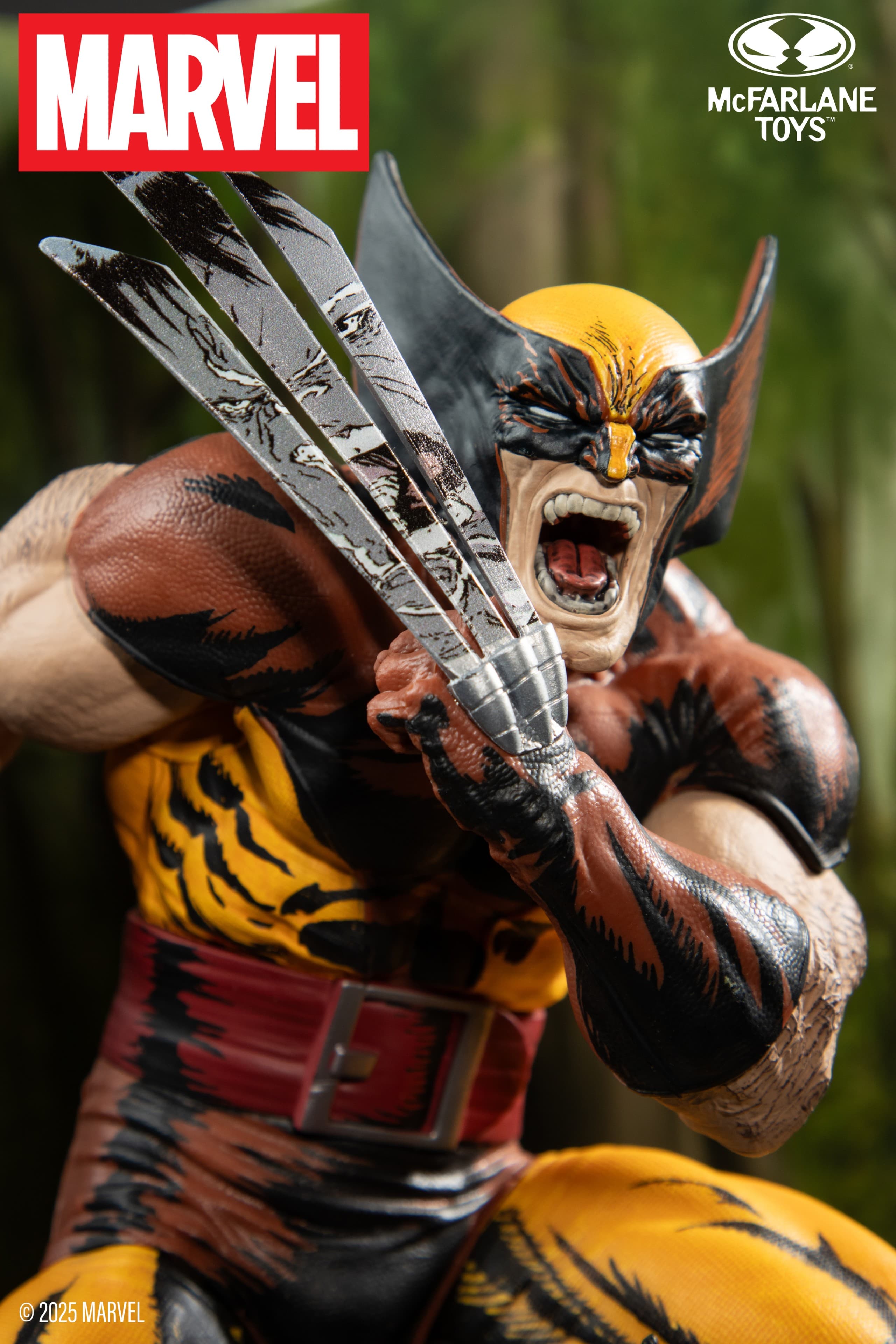
TODD MCFARLANE: Well, I'll tell you what I think the hardest part is: the hardest part is taking a 2D and turning it 3D. The sculptor and the company putting it out now has to make an interpretation of what that one single drawing looks like in 360 degrees. To give you a super simple example, when we did The Simpsons toys years ago, at some point, you have to ask yourself the question: what's the back of Homer's head look like? They've never shown it, and so you have to invent information.
Now that you invent the information, two things have to happen: A. does it look good because you're adding, because the actual artist never gave it to you, and B. are you adding it in such a way that you're not taking away from what the artist did in their drawing, the one that you're using as your reference point. So every time, we have a lot of conversations, and I pay way more attention to the profile, especially if it's a drawing of, let's say, the character looking straight at us. I spend way more time on the profile with my sculptors, and sometimes the back than I do on the front, because the front's easy to nail.
But now, it's like, "Do you know how far back the arm is in that drawing? Guys, I think you're making a misinterpretation. You think that the legs are parallel; that drawing looks like one of the feet is more forward than the other." Now the question is, on the side, how far back is that other foot, so it still looks dynamic, and it doesn't look like they're running or whatever else. Although we get excited because we go, "Oh man, we get to do that cover!", the challenge just begins once we decide, and you guys at Marvel say, "Yeah, you can do that cover," the challenge begins for us to get there in a meaningful way, because you never know how they're going to put it on the shelf. They might not put it exactly the way that you do.
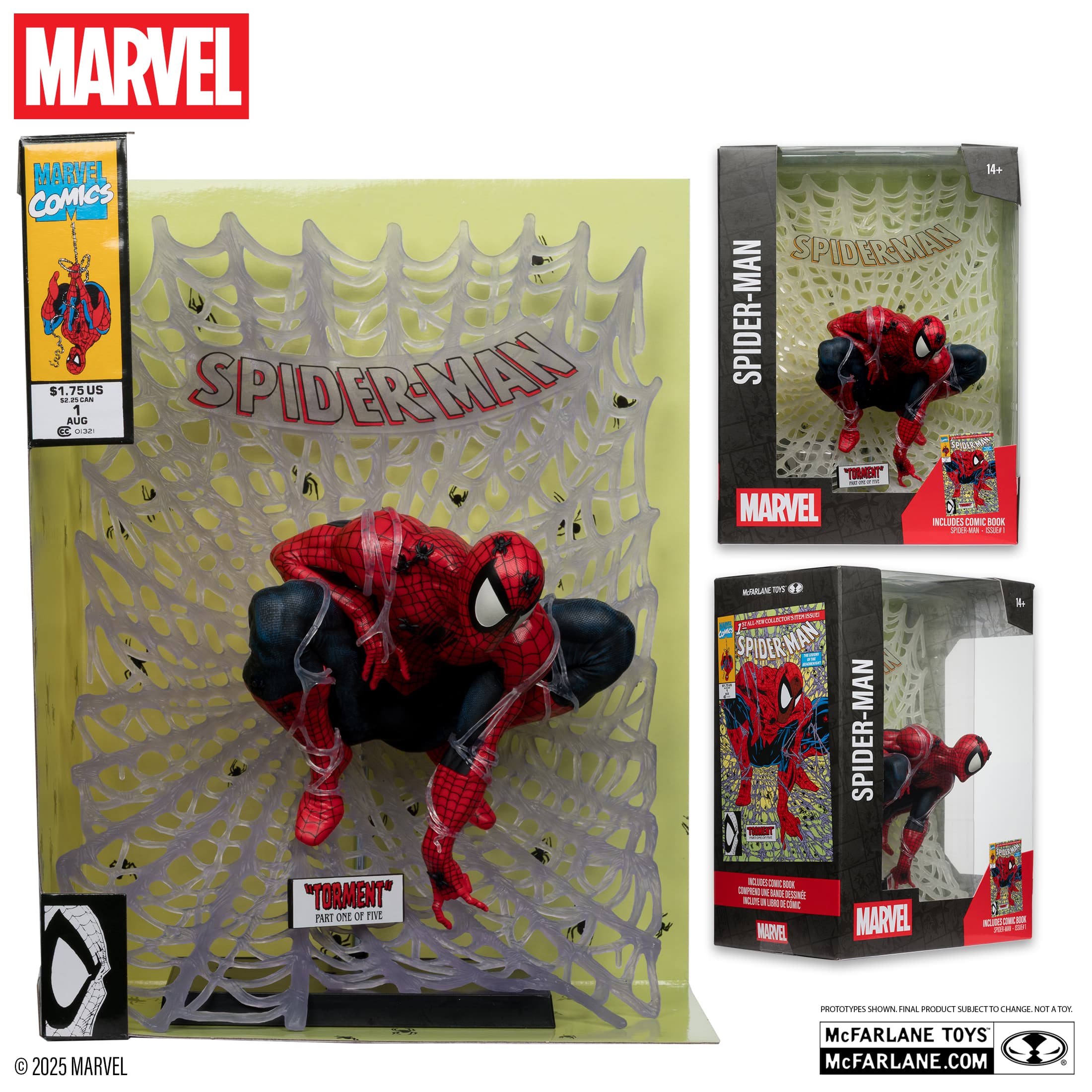
The fun part too, though, is we've done some where we just do the background of what that original comic book was. So if you take the figure and you take the background, that's the comic book in 3D, which is fun. Then the other one is, we just actually do the entire image... We're going to show you where we borrowed this artwork from, or it's on the back in a meaningful way on the package, just to give reference to the consumer as to why we picked that image.
Sometimes people go, "The legs look kind of long or whatever," and it's like, "Well, look at the art on the back, because that's how the artist did it!" We are just being loyal to the artwork, and so maybe you don't like the art style. That's fair. Everybody gets to decide what kind of art they like, but being authentic to the artist? We have to also do that. So as an artist, I want to make sure that I'm true to artists, while at the same time serving the needs of Marvel and what it is that you guys need out there too.
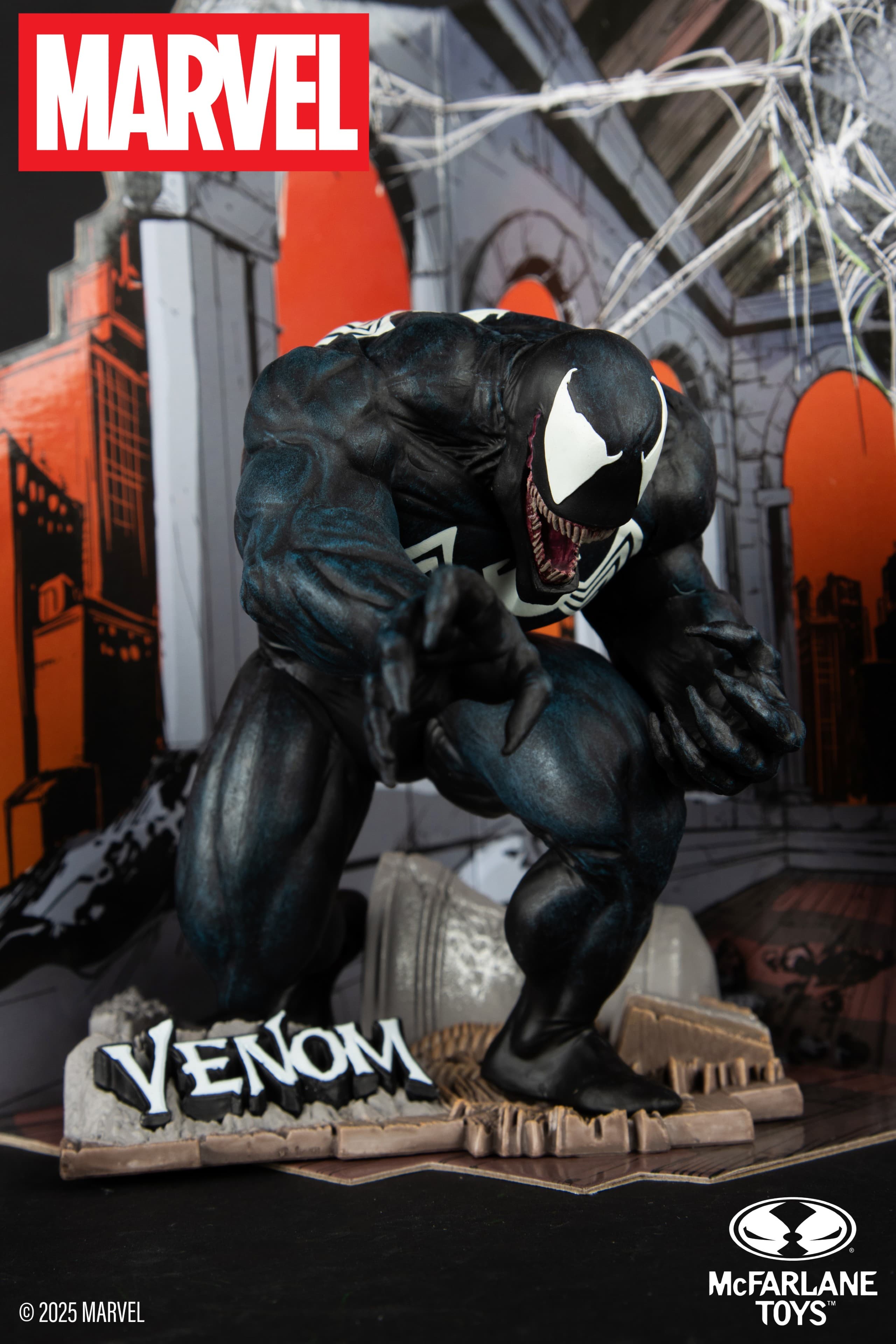
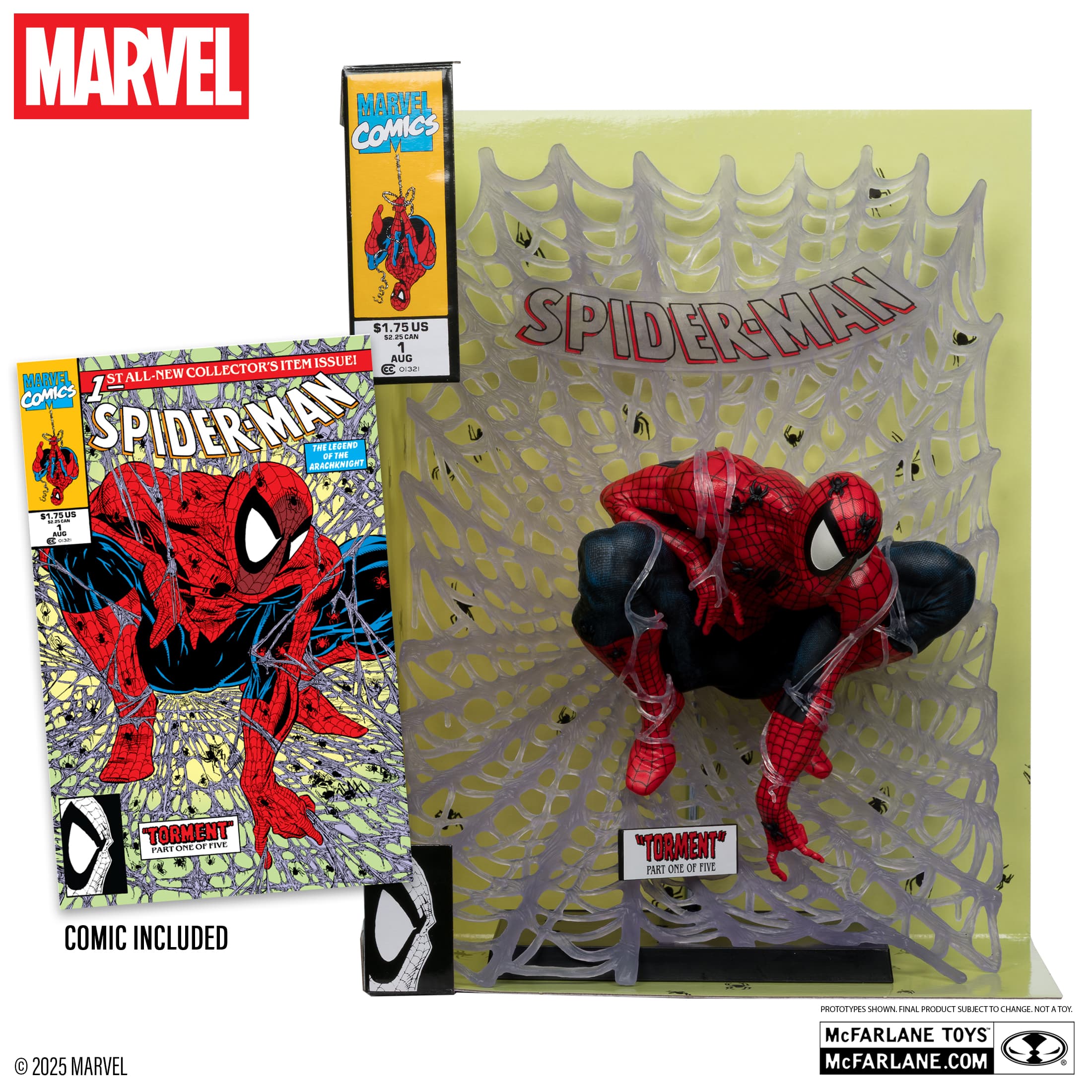
MARVEL.COM: I know you’ve been in both the comics and the figurine game for a while now, but how does it feel to see your artwork recreated as a 3D sculpt, like this Spider-Man?
TODD MCFARLANE: When it's my stuff, super involved! [laughs] Because, oddly, some of the things that we just said earlier, like, "What does it look like on the side and whatever?", in my head, I actually have an idea. So I'm going, "Oh, I don't have to ask anybody. It's in my head someplace."
But we've run into it even with my own [art], especially on Spider-Man, because when I was drawing Spider Man, I was just trying to do super cool visuals of Spider-Man doing his acrobatic swinging and stuff that I ignored anatomy many, many times. It's true. I knew when I was drawing it, it's like, "This is impossible, but it looks super cool, right? I hope people won't pay attention that that's not anatomically right."
What happens is we start sculpting, and I've had it happen on a couple of my Spider-Mans, where my sculptor [gives me] a phone and goes, "Boss, where do I put his ass? If I put it up here, it doesn't look right. If I put it down here, it seems like it's too long!" And he's right, because there's no good place to put the connection of his hips to his spine going up into his torso. And you're going, "Uh oh, we may have to just do a little bit of cheating here to get what we're doing."
Let me say, I think it'd be way more difficult to do the Spidey drawings that I did without me around, because now there's a lot of interpretations where I can go, "Oh no, no, here's what I meant. Here's what we did here." And then you turn it and you go, "Okay, does this sort of kind of work?" The fun part of some of them is, like I said, getting the 3D version of it, which is why, like I said, you get away from it being an action figure at that point. To me, they're more like dioramas, and they're kind of art pieces done right, especially the bigger ones, the bigger scale ones. You're putting an art piece up on your shelf that looks good.
If you're going to put a piece of 3D art out, and we all do it at home—I'm not talking about what you and I are discussing, but any piece of art—it has to work, no matter what angle you're coming into the room. So these pieces, we try and make them as good as possible from every angle that we can, and we cross our fingers and hope that we succeed more times than we don't.
Here's what you know and I know about any kind of figure-making/toymaking: it's a very inexact science, and you know—you've seen it with your own eyes—that sometimes stuff comes across your desk, and it is staggeringly good, and it is like, "Oh my god, they nailed it. Matter of fact, this turned out better than we thought." Then, from the same company, and I'm guilty of it too, two figures down the line, you go, "Yeah, it's good, but it's not great," and I wish I could figure out why, too.
Part of it is because you're doing mass production and you're dealing with different factories. But toymaking, to me, is like Aaron Judge playing for the New York Yankees. Sometimes he hits a home run and he knows he's capable of doing it because he saw the result of it, and the next day, he's 0-for-4 with three strikeouts, and he knows what he's capable of doing, and he does it, but he can't do it all the time, and it's frustrating because he knows he's capable of doing it. I've made enough toys. You've seen enough toys. We've seen the Holy Grail, and you just go, "Why can't we just replicate the formula?" If it was that easy, everybody'd be doing it. It's not that easy. So you try to, again, get way more right than you get wrong, and you call that a success in the toy business.
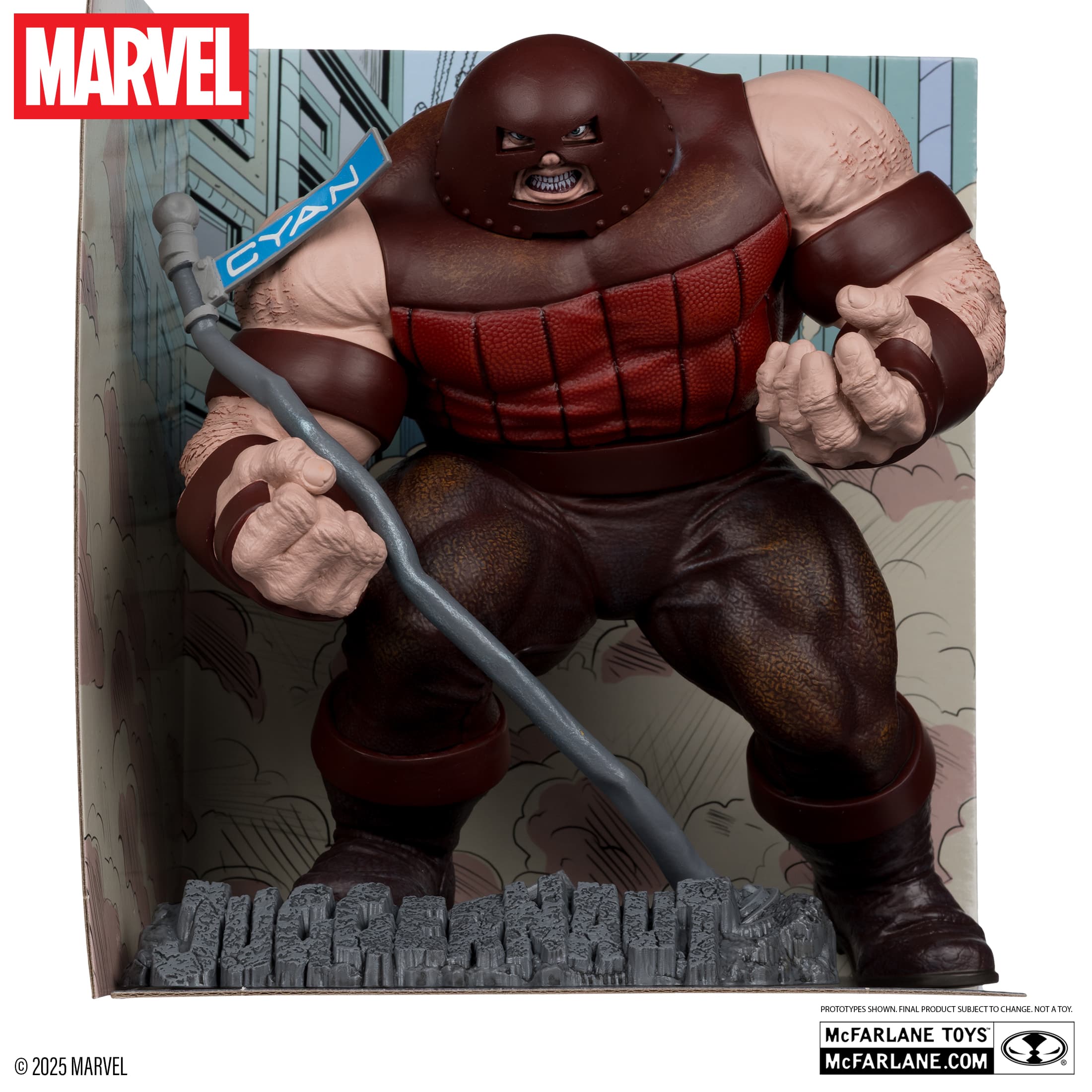
MARVEL.COM: Which of these figures would you say is your favorite, and what makes that one stand out to you?
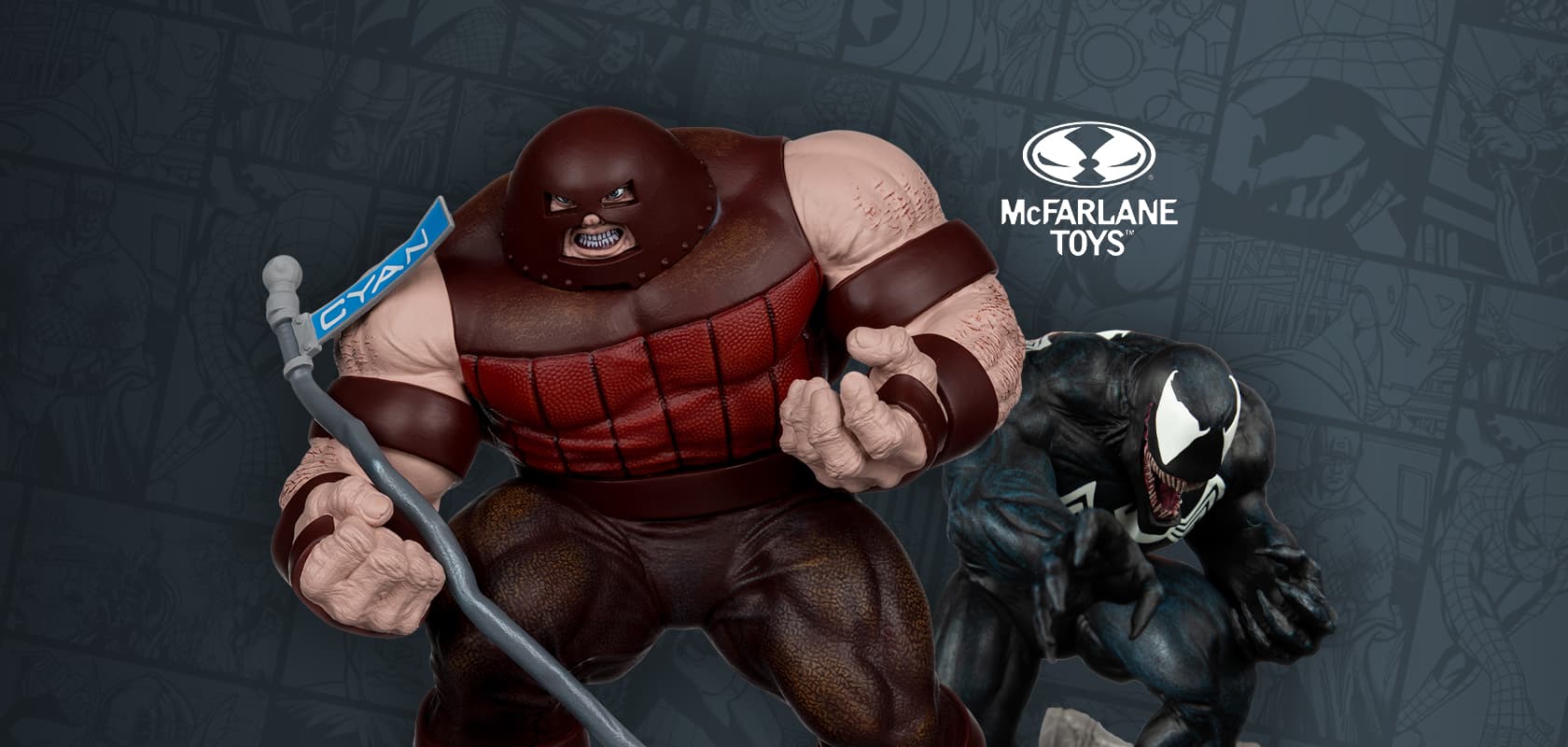
TODD MCFARLANE: Maybe the Juggernaut. Yeah. I am going to be completely biased. I do have a bias to big figures. All things being equal, take the one with more plastic, right? I've never done a big, bulky figure and never sold it. I have never had [big figures become] what they call in our industry "peg warmers."
We've all had them. I've never had a bulky, bulky figure ever be a peg warmer, because people go, "That's a lot of plastic for that price. I'll take it." A six year old goes, "Look at how big that is, Mom! For the same price? I'll take it!" Mom goes, "If you're gonna get one, get the one with a lot." So it goes easy. The skinny figures and stuff, the small figures, are way tougher to sell. So I like the big one.
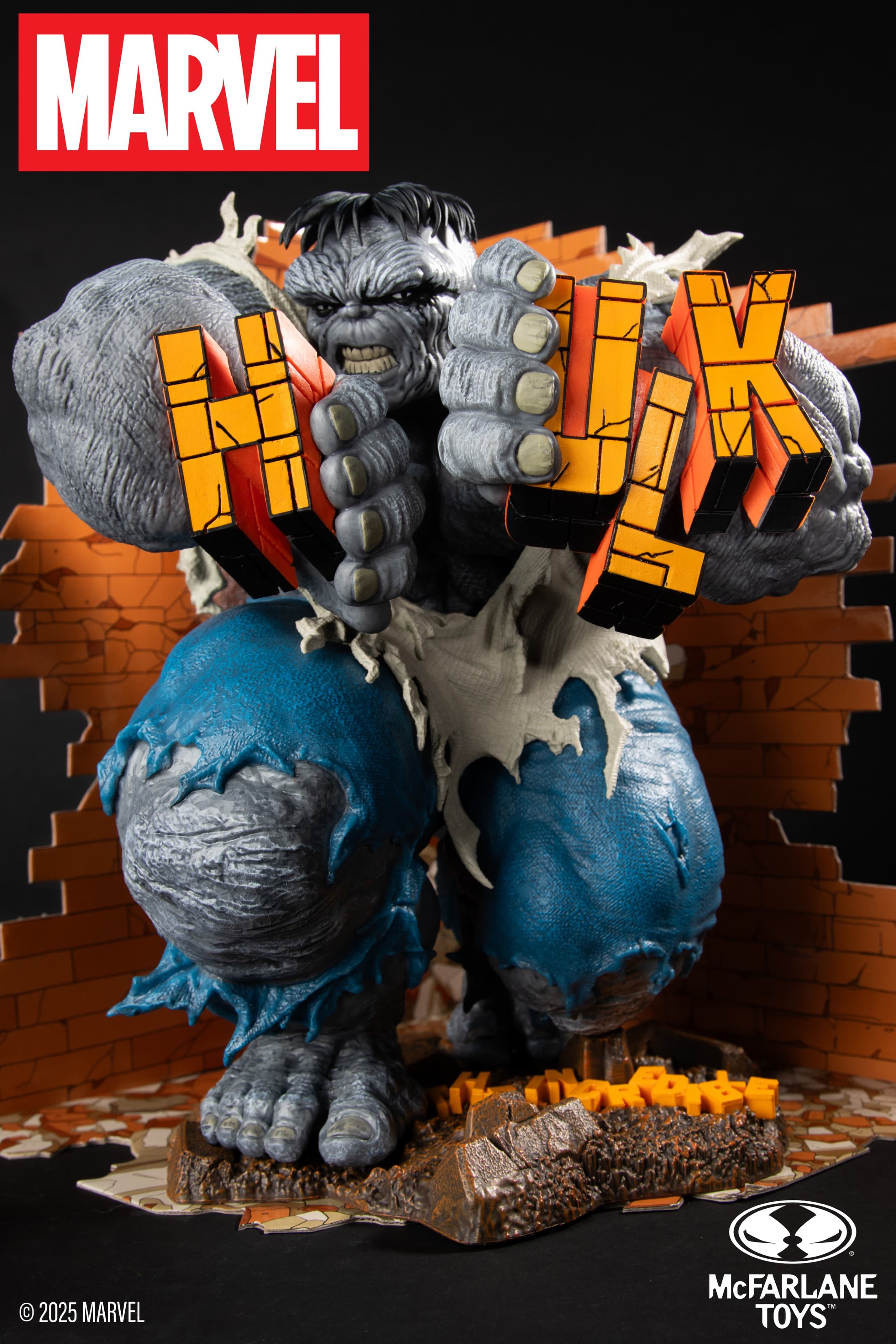
Juggernaut is big. He's one of the villains in the X-Men pantheon. But it was taken from a two-page spread that I did that came from the very last book I ever drew for Marvel Comics. That two-page spread was the last two pages I ever drew for Marvel Comics. So not only is there a little bit of a pang going, "Man, that was it. That was the end of playing for that band. That's the drawing." But one of the reasons I quit Marvel was I was going to have my first daughter, my first child, and I didn't know what being a father was going to be, how much time it was going to take, so it just seemed like a time for me to just take a step back. I just went, "Hey guys, I'm done. I've got a child coming."
They gave us a date that my daughter was supposed to be born, and I'm completely deadline driven, and I go, "Perfect! I can finish this issue, and then she'll be born the next day!" And she came two days early. So she came two days early, and why that matters is that I had to finish up that two-page spread of the Juggernaut. So I did that as I had these weird new feelings of being a dad and your life's about to change.
If you look at it, he's bending a sign post, and I snuck in there—nobody asked or whatever, but I snuck in there—he's bending the post; it's on the corner of 48th St. and Cyan. Cyan is the name of our daughter, and cyan is the color of blue in printing right, and we colored it blue. The sign was dark blue and light blue. So I was able to sneak in Cyan. She's one day old, and I was able to get my daughter's name on it.
Now, I don't even know if you guys know, because you go, "Get it looking like the artwork!", the toy has Cyan's name on it too. She's now 33 years old and she's a doctor. I don't even think she knows this. I don't think I've ever told her this, but—I've never given her the comic book—I'll be able to go, "Hey, look! There's your name!" I'll be able to give her the toy, because she'll be able to put that on the shelf, instead of like a DVD or a comic book, and go, "There's my name! I'm on one of the Marvel toys! That's kind of cool!"
So that's my long-winded, biased story on why that one resonates on a couple different levels… The more times you can find a little bit of joy while you're doing [the work], that's just one of those moments where you just sneak in a smile on your face and you do it, and you go, "Oh, cool."
Want to read more of Todd McFarlane's Marvel comics? Join Marvel Unlimited for instant access to 30,000+ comics on the Marvel Unlimited app or on the web, with digital issues spanning Marvel Comics classics to ongoing series!
The Daily Bugle
Can’t-miss news and updates from across the Marvel Universe!