Latest News
History
History
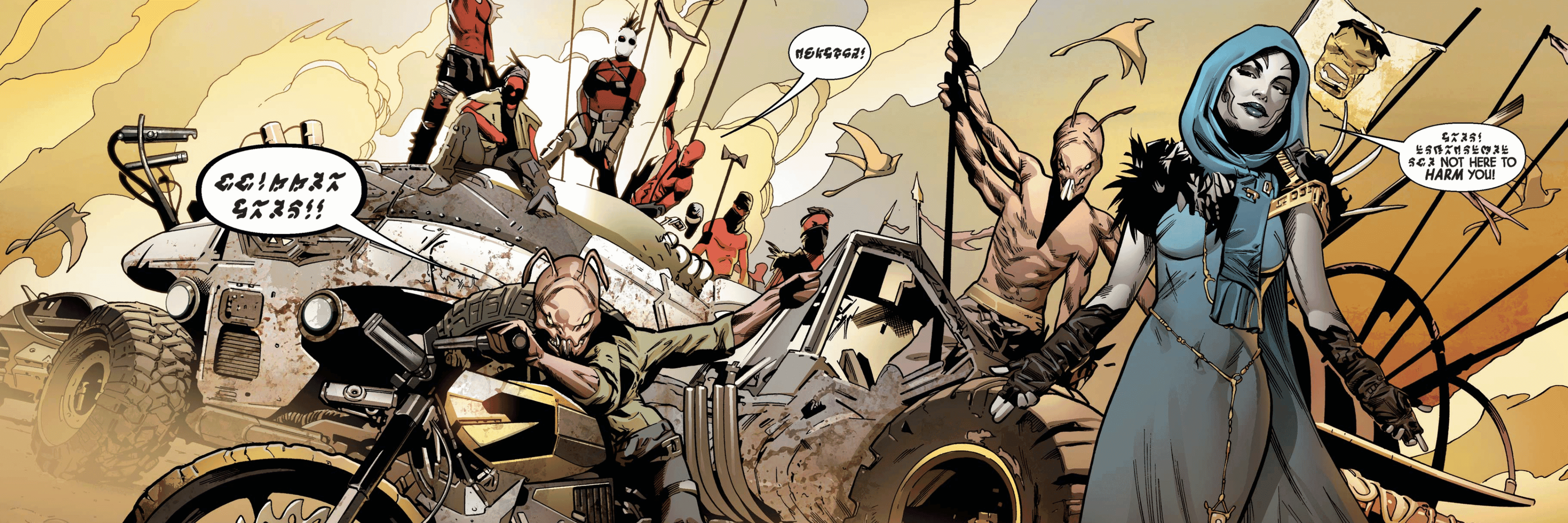
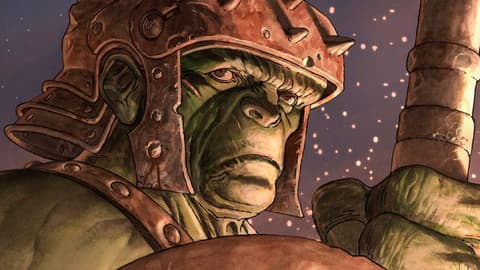
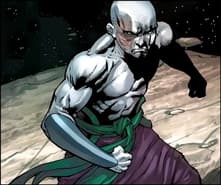
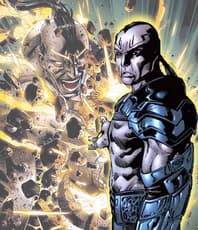
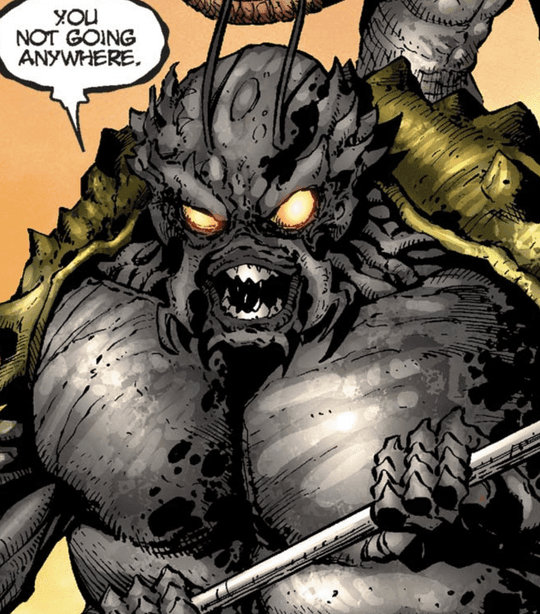
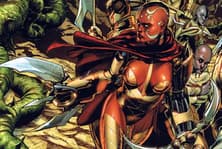
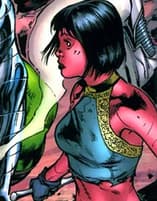
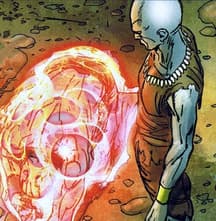
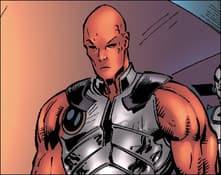
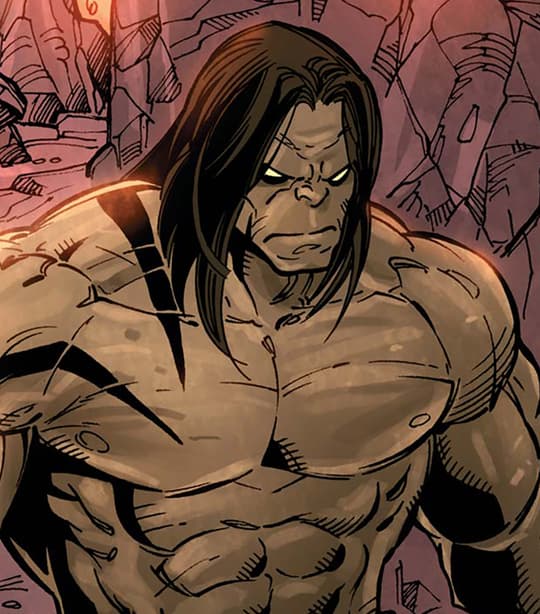
Inhabiting the planet Sakaar and its moons are four main sentient races: The Imperials, the Natives, the Shadow People, and the Spikes, who collectively are known as Sakaarians.
Healing the Sakaar
The story of the Sakaarians begins thousands of years ago. Located in the Tayo system within the Fornax Galaxy, Sakaar is a planet literally pulling itself apart on a tectonic level. Though the insectoid Natives live there, it would be the Shadow People who land and use the Old Power to make the planet habitable once more.
From there, the Shadows go off into the deserts, creating small nomadic tribes while the Natives build their own impressive hive systems. At some point, the pink-skinned group known as the Imperials come along. They learn farming from the Natives and build up their own city-states, which eventually evolve into kingdoms. With their own populations skyrocketing, the Imperials manage to use their might over the Natives to drive them into ever more hostile territory, becoming the dominant lifeform on the planet. The Imperials also control the Empire, which subjugates all of the “lesser” races of Sakaar. Finally, the Spikes, are a race of gelatinous, shape-shifting xenophobes arrive on Sakaar intending to feed on its organic materials, only to be defeated and banished to one of Sakaar’s moons after a decades-long war against a coalition of the planet’s other races.
A Variety of Abilities
The Imperials of Sakaar are very much in line with humanity when it comes to strength, size and durability. A few, born as Primes, are far more powerful. The Natives have an ability called “chemming” that allows them to communicate on a telepathic level with their own kind as well as others with open minds. The king of a hive goes through a transformation that makes him much larger and sturdier than those in his care. Finally, the Shadow People have their own physiology making them larger and stronger. Some of them can also tap into the Old Power, their attempt to make a new version of the Power Cosmic thousands of years ago. This results in increased strength and stamina as well as the abilities to shoot energy blasts or manipulate the ground itself.
By 536 Post, Sakaar’s civilizations are capable of incredible feats of engineering, but they remain a pre-industrial society without internal combustion engines or any other kinds of artificial energy sources. With the arrival of the Great Portal—a cosmic vortex which opened in the planet’s orbit during the height of the Spike War in the year 536 Post—the groups experience additional technology, extraterrestrial species, and valuable detritus deposited on the planet. The Imperials and the Natives embrace the highly advanced off-world technology that falls through the Portal, but only a handful of beings on the planet understand the advanced workings of mechanical engineering, therefore limiting the amount of original manufacturing accomplished. Many Sakaarians remain superstitious and suspicious of the new technology, and Sakaarians still fight with swords and spears alongside their guns and blasters.
A Separatist Society
For a time, the Shadows, Natives, and Imperials managed to share the planet just fine, with each group essentially ignoring the others. However, when the Imperials need to expand, they start taking over Native resources for themselves. Much further down the line, when the alien Spikes land in the year 504 Post, and launch a devastating attack upon the province’s outlying cities, regarding the humanoids on the plant as food versus sentient organisms, all three groups work together to fight them in a decades-long war. For their help, the Natives were told they could continue living on their land while the Shadows were told they could remain on their own as long as some warriors dedicated themselves to the king. Shadows Hiroim and Caiera performed these roles loyally for a time.
Since the arrival of the Great Portal in 536 Post, which transports life forms and technology from all quadrants of the known universe, many other sentient aliens have made their way to Sakaar in the last three decades. Many of these offlanders are captured, made docile with Obedience Discs and sold into slavery as laborers, or thrown into the gladiator battles. However, any gladiator can win their freedom and citizenship if they survive three rounds in the Great Games, a time-honored tradition in Imperial culture. Some escape and live in the planet's shanty neighborhoods and ghettos of the Empire’s major cities where they work as merchants and craftsmen. Most visitors wind up stuck on the planet, but a few have managed to leave. A small percentage of the planet’s population are citizens, the rest are conquered people or slaves. At this point, Sakaar is not considered a player on the cosmic scene.
Empire Building...and Crumbling
As the Imperial population grew on Sakaar, each of the kingdoms grew to possess a fair amount of power. Most of them never fully trusted the others leading to the Dark Ages, a time of great war and bloodshed. Eventually, Angmo stood up and began unifying the kingdoms by force, turning the results into the First Sakaarian Empire. At that point, he named himself the Father Emperor.
While the Imperials solidified themselves under a still-shaky shared structure of leadership and government, both the Natives and Shadow People carried on mostly unmolested. However, when the Spikes crashed on Sakaar, they seemed to attack anyone and everyone without a thought. Each group fought back on their own, but it became evident that they would need to unite. The Imperials said that the Natives could carry on living on their land. The Shadow Pact would allow the nomads to carry on their lifestyle in exchange for the dedication of a few Shadow warriors to the Imperial forces. This led to Hiroim serving Angmo and Caiera backing Angmo-II, AKA Red King.
It took nearly 50 years to finally stop the Spikes. Angmo managed to defeat the head of a group of Death's Heads that were dropped on the planet by way of the Great Portal. With that, they began following him. Between the additional forces and weapons found on the Death’s Heads ship, Angmo managed to finally push back the invaders.
During the war, Angmo had the town of Geot built into the Crown City and established it as the new capital. This became the location of the Great Games, a continuation of the gladiatorial combat that began as a way to establish the leaders of Imperial tribes early on in their history. Though Angmo did not necessarily respect the Natives, he continued to honor their deal as he did with the Shadows. Angmo did lose his Shadow, Hiroim, after ordering the warrior to kill Angmo-II as a child, concerned that the boy would grow up to become an awful leader. Not long after, Angmo was killed while on a hunting trip. The official word was that it was an accident, but others say that Axeman Bone bested the king in battle.
With Angmo gone, Angmo-II took the throne as well as the name Red King. While his father managed political discourse, the newcomer showed little interest in working with others. He routinely went back on his fathers' deals—including alleged plans to wipe out the Native population—and did anything and everything possible to acquire more power and smite his enemies.
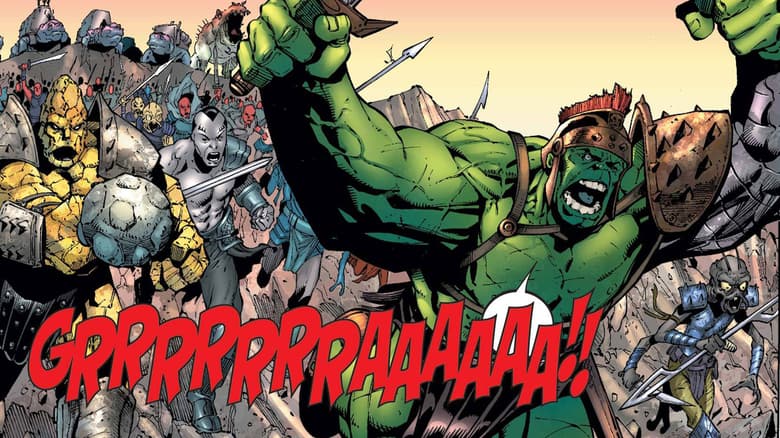
He also allowed the Great Games to carry on as they had, bringing in interesting fighters from beyond the planet by way of the Great Portal. One of those proved to be the Red King's downfall, Bruce Banner, AKA Hulk. He was controlled by an Obedience Disc and thrown into the gladiatorial ring where he proved to be incredibly adept at smashing his enemies. He met a group of warriors who would become his Warbound, including Native Miek, Shadow Person Hiroim and Imperial Elloe Kaifi.
This group managed to break free of Imperial control thanks to Norrin Radd, AKA Silver Surfer. Along the way, Hulk and the others came to see how poorly the Natives were being treated. They also grew to learn more about the Shadows, their secret history on the planet and about the legends of the Sakaarson and World Breaker, which were known to all three groups. He proved himself to be something of both after defeating Angmo-II and taking over the throne. Hulk not only freed everyone, but also married Caiera and figured out how to make peace with the Spikes before helping them get back to space.
With peace in the works, some embraced it, though others like Miek did not. He still felt a great deal of resentment towards the Imperials and did not want to see them stop paying. Thinking that his leader had given up the cause, Miek arranged for the ship that brought him there to explode, tearing Sakaar apart. Caiera sacrificed herself to keep the world together and also give birth to her sons with Hulk, Hiro-Kala and Skaar. Hulk did not know about any of that as he was already on one of the Shadow Peoples' stone ships—along with the Warbound and other Sakaar survivors—to bring his rage to Earth.
That contingent fought against Earth's heroes, but after finding out the role Miek played in it all, he gave up the fight. Miek was arrested, but the Warbound got away, going on their own adventures. Meanwhile, the Imperials and Natives made their way to the Savage Land and set up the Village of New Imperia. After reuniting with Elloe later on, she became their queen.
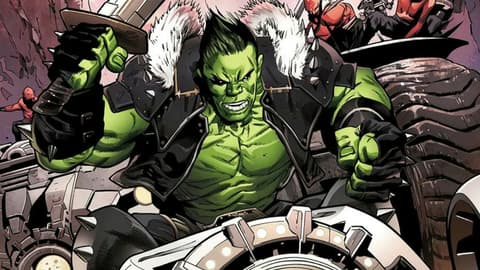
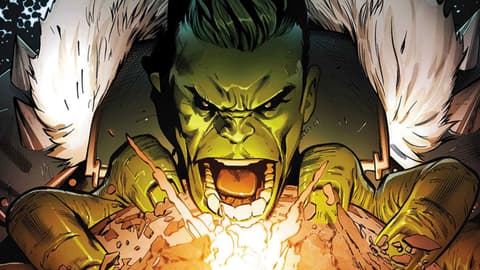
Back on Sakaar, everything was thrown into turmoil. The bomb had gone off right in Crown City, so all of that infrastructure and organization was torn asunder. This allowed Axeman Bone and other warlords to rise to power, working with Natives and Shadows when it suited him. Skaar and Hiro-Kala got in on the fighting, but most of it all proved fruitless as Galactus came and consumed the Old Power-strong planet, leaving it little but rubble. Hiro-Kala led a contingent of survivors in stone ships that ultimately got them on the Microverse planet K'Ai, which had made its way into the usual universe with some Sakaarian survivors.
That seemed to be it for Sakaar, but then it reappeared as the home of the Time Stone. Kl’rt, AKA Super-Skrull, managed to find it and take it, but the planet remained, once more populated with Natives, Shadows, and Imperials. However, instead of being separated, they seemed to have formed tribes with one another, at least in some cases. Though still dealing with warlords and segregation, there is some hope that this new Sakaar might be able to learn from the mistakes of the past and build something better.
Base of Operations
- Planet Sakaar, Tayo Star System, Fornax Galaxy
Current Members
- Red King (Angmo II),
- Axeman Bone,
- Caiera,
- Hiro-Kala,
- Hiroim,
- Miek,
- Princess Omaka,
- Elloe Kaifi,
- Old Sam (of the Clear-Eye Shadow),
- Lavin Skee,
- Skaar